How To Create A Daily Reading Routine
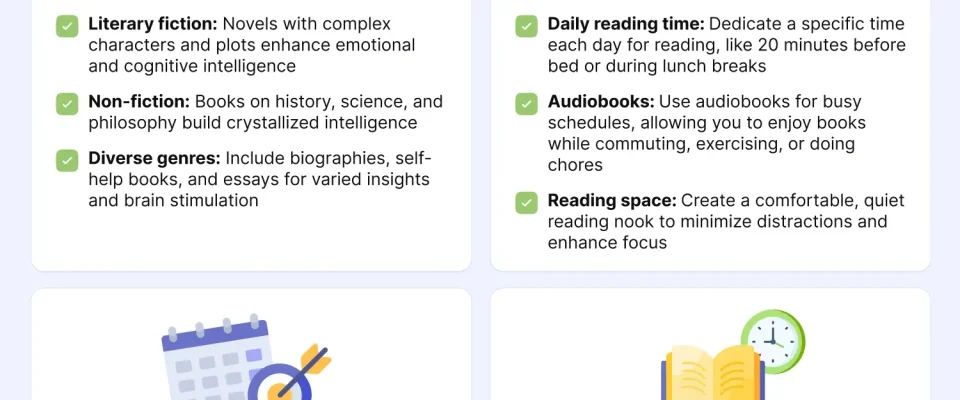
In an era dominated by algorithmic feeds, hyper-personalized notifications, and micro-attention spans, the deliberate act of reading remains one of the most transformative intellectual practices available. As society navigates the complex digital landscape of 2026, the challenge of maintaining focus has intensified. Yet, the cognitive, emotional, and professional rewards of regular reading are more critical than ever. Research consistently demonstrates that a structured reading routine can expand vocabulary, enhance empathy, reduce stress levels, and improve overall cognitive longevity.
However, establishing a sustainable reading routine is rarely a matter of mere willpower. Many individuals initiate their reading journeys with ambitious goals, only to find their books gathering dust after a few days. The transition from sporadic reading to a permanent daily ritual requires a systematic approach grounded in behavioral psychology. This comprehensive guide details the precise methodologies, scientific frameworks, and practical strategies necessary to construct a highly effective daily reading routine that endures.
The Neurological and Cognitive Benefits of Daily Reading
Before designing a daily routine, it is essential to understand the underlying mechanisms that make reading a vital cognitive exercise. The human brain is highly neuroplastic, meaning it continuously reorganizes itself in response to learning and experience. Reading is a complex cognitive task that demands the coordination of multiple brain regions, including those responsible for vision, language, and associative comprehension.
Cognitive Stimulation and Analytical Capacity
Unlike passive media consumption, such as watching videos or scrolling through social media, reading requires active mental engagement. This process stimulates the left temporal cortex, which is associated with language receptivity and physical connectivity. Regular cognitive exercise through reading strengthens these neural pathways, leading to improved memory retention, enhanced analytical thinking, and sharper problem-solving capabilities in professional environments.
Stress Reduction and Emotional Intelligence
Engaging with a book serves as an exceptionally effective method for stress reduction. Cognitive research indicates that reading for as little as six minutes can reduce stress levels by up to 68%, outperforming other common relaxation methods such as walking or listening to music. Furthermore, reading literary fiction has been shown to enhance "Theory of Mind"—the capacity to understand and attribute mental states to oneself and others—thereby directly boosting emotional intelligence and empathy.
The Psychology of Habit Formation in Reading
The primary reason most reading resolutions fail is a reliance on motivation rather than system design. Behavioral scientist James Clear and other researchers have demonstrated that long-term habit formation relies on a neurological loop consisting of four key components: cue, craving, response, and reward. To build a reading habit that lasts, one must deliberately design each stage of this loop.
[Cue: Triggering Event] ──> [Craving: Desire for Reward] ──> [Response: The Act of Reading] ──> [Reward: Cognitive Satisfaction]
- The Cue: A trigger that signals the brain to initiate the behavior. This could be a specific time of day, a location, or an immediately preceding action.
- The Craving: The motivational force behind the habit. In the context of reading, this is often the desire for intellectual growth, entertainment, or mental relaxation.
- The Response: The actual behavior performed, which is the act of reading.
- The Reward: The positive reinforcement that tells the brain the routine is worth remembering. This can include a sense of accomplishment, knowledge acquisition, or stress relief.
By understanding this cycle, individuals can transition reading from a high-effort willpower task into an automatic, seamless component of their daily schedules.
Step-by-Step System to Establish Your Reading Routine
Building a routine requires a structured, step-by-step approach. Rather than attempting to revolutionize one's lifestyle overnight, the most successful routines are built incrementally.
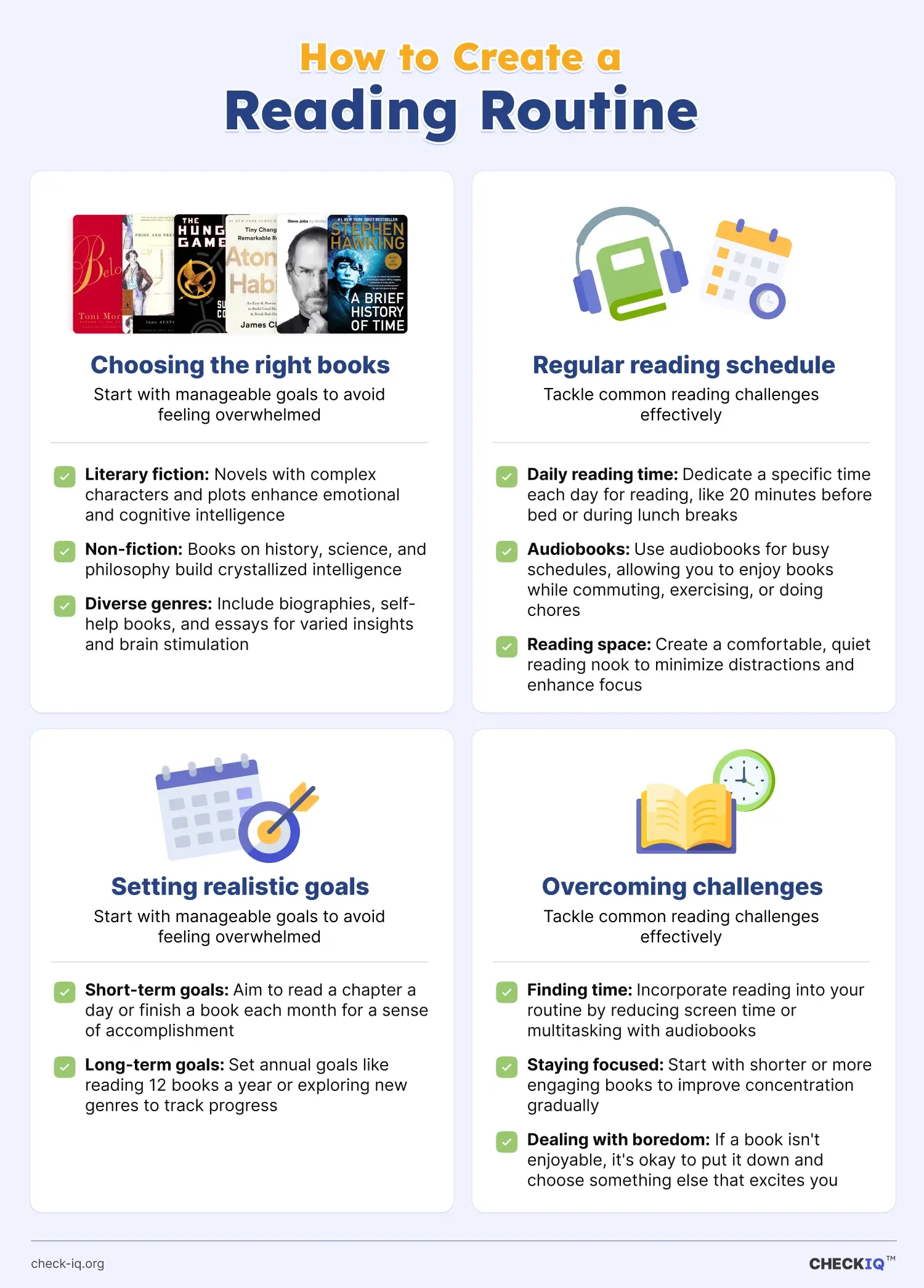
Step 1: Define the Purpose and Objective
A sustainable reading routine must align with personal or professional goals. Individuals should clarify whether they are reading for professional advancement, academic study, stress reduction, or creative inspiration. Defining this "why" acts as a motivational anchor when competing priorities threaten to disrupt the routine.
Step 2: Implement the 10-Minute Rule (Micro-Commitments)
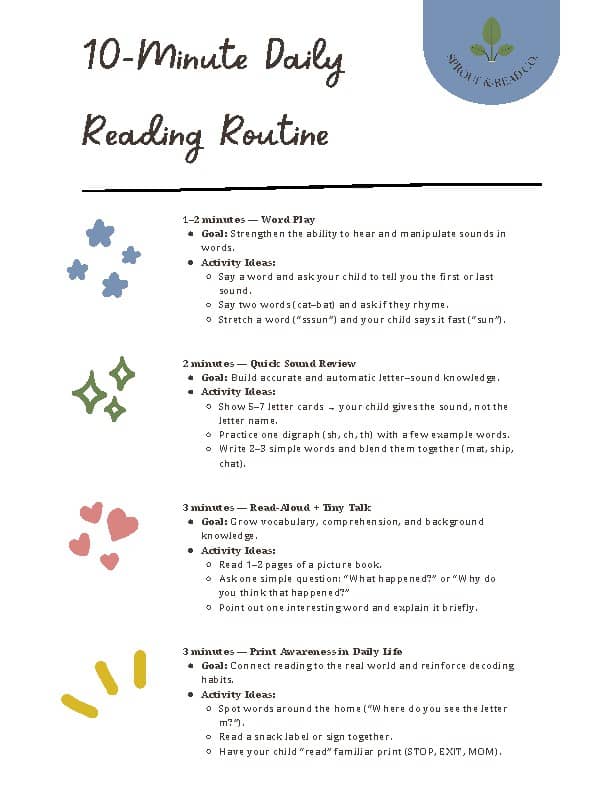
Setting overly ambitious goals, such as reading one book per week or an hour per day, often leads to cognitive fatigue and eventual abandonment. Instead, one should begin with micro-commitments. Committing to just 10 minutes or 5 to 10 pages per day lowers the cognitive barrier to entry, making it virtually impossible to fail.
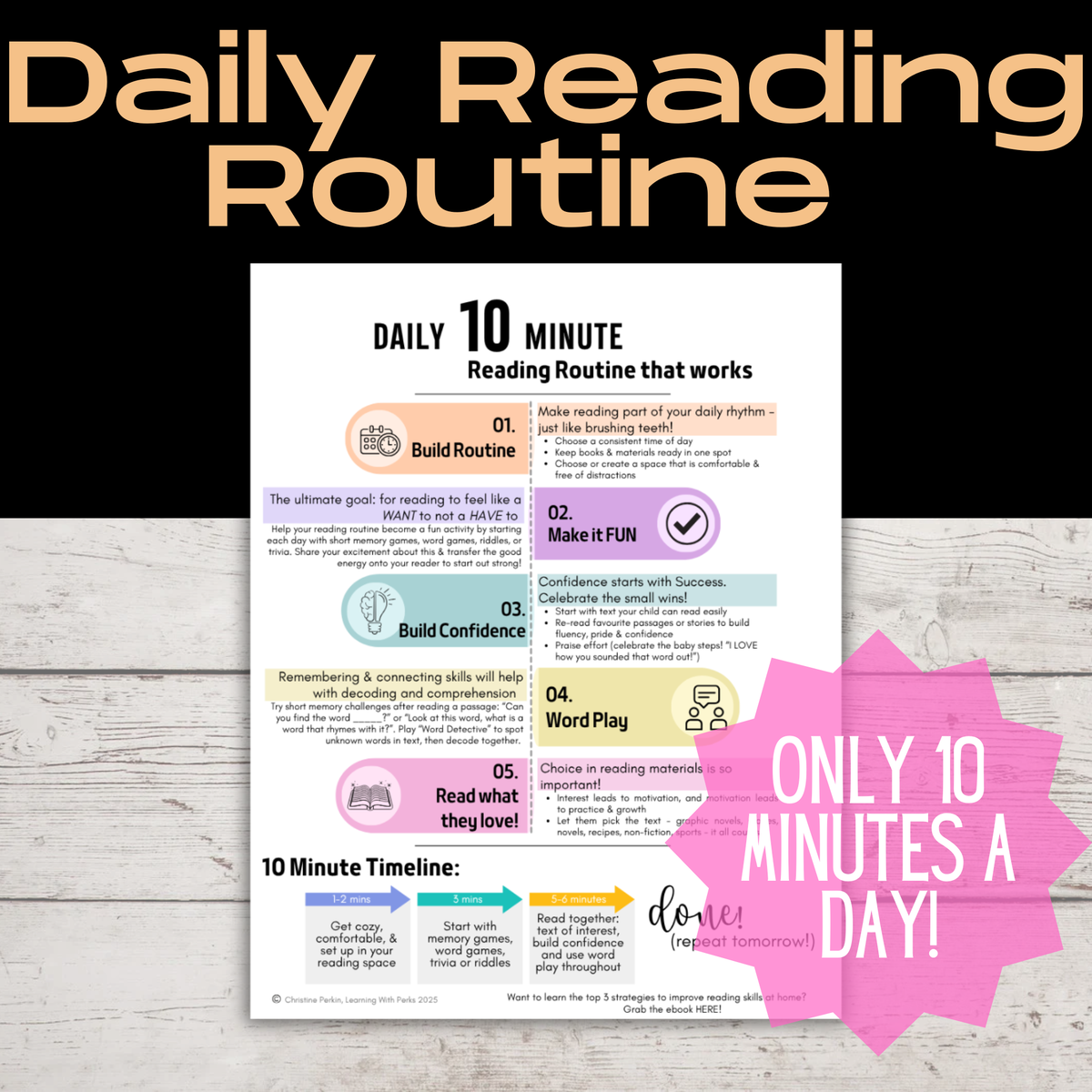
Once the 10-minute threshold is crossed, the initial friction of starting disappears. Frequently, readers will find themselves continuing far past their initial target. However, even if they stop exactly at the 10-minute mark, the daily streak remains unbroken, reinforcing the identity of being a consistent reader.
Step 3: Utilize Habit Stacking
The most effective way to introduce a new habit is to anchor it to an existing, deeply ingrained daily routine. This technique, known as habit stacking, bypasses the need for conscious decision-making. The structural formula for habit stacking is simple: "After [Current Habit], I will [New Habit]."
| Current Habit (Anchor) | New Reading Habit |
|---|---|
| Pouring the morning coffee | Reading 5 pages of non-fiction |
| Sitting down for a lunch break | Reading one article or chapter |
| Completing evening dental hygiene | Reading 10 minutes of fiction in bed |
By linking reading to these automatic behaviors, the routine quickly becomes a natural extension of the daily flow.
Step 4: Minimize Environmental Friction
Friction refers to the number of obstacles between an individual and a desired behavior. If a book is hidden away in a drawer, the brain will default to easier, high-dopamine activities like checking a smartphone. To combat this, one must optimize their environment for reading success.
- Physical Visibility: Place a book on the pillow, on the dining table, or next to the coffee maker.
- Digital Accessibility: Position reading applications on the primary home screen of mobile devices, while moving social media and entertainment apps into hidden folders.
- Dedicated Space: Designate a specific, comfortable chair or corner with proper lighting to signal to the brain that it is time to focus.
Step 5: Select the Right Formats for Your Lifestyle
In 2026, the modern reading ecosystem offers a diverse array of formats. Rather than limiting oneself to traditional print, a flexible routine leverages multiple mediums to maximize reading opportunities throughout the day.
- Print Books: Ideal for deep, undistracted focus and tactile feedback, particularly during evening wind-down periods.
- E-Readers: Excellent for portability, adjustable font sizes, and instant vocabulary lookup during commutes or travel.
- Audiobooks: Perfect for converting passive, low-cognitive tasks—such as driving, exercising, or performing household chores—into productive reading sessions.
Strategies for Overcoming Common Obstacles
Even the most carefully planned routines will encounter obstacles. Understanding how to navigate these challenges is vital for maintaining long-term consistency.
Overcoming the Digital Distraction Trap
The constant allure of digital screens is the single greatest threat to a reading routine. To protect reading time, individuals should utilize device features such as "Do Not Disturb" or focus modes during scheduled reading blocks. Keeping smartphones in a separate room during deep reading sessions drastically reduces the cognitive load required to resist checking notifications.
Navigating Reading Slumps and the Sunk Cost Fallacy
A common error is forcing oneself to finish a book that is no longer engaging. This phenomenon, known as the "sunk cost fallacy," often halts reading momentum entirely, leading to weeks of inactivity. The solution is simple: abandon books that do not capture your interest. If a book fails to engage within the first 50 pages, it is mathematically and psychologically more efficient to pivot to a different title.
Balancing Speed, Comprehension, and Active Reading
While speed-reading techniques exist, they often degrade comprehension, particularly with dense non-fiction or complex literature. For maximum retention, readers should practice active reading by highlighting key passages, annotating margins, or summarizing chapters. Adjust reading speeds dynamically: accelerate through lighter fiction, and decelerate for philosophical, technical, or highly analytical texts.
Advanced Habit-Building Frameworks
For individuals seeking to elevate their reading routine from a simple habit to a lifelong ritual, advanced frameworks offer structured accountability and deeper engagement.
Implementing a Reading Tracker or Journal
Documenting progress provides a powerful psychological reward. Individuals can use digital tools or physical journals to log finished books, note key takeaways, and track daily streaks. Visualizing progress over weeks and months reinforces the habit and provides a tangible sense of accomplishment.
Social Accountability and Book Clubs
Human beings are inherently social creatures. Joining a local or online book club introduces an element of external accountability. Discussing literature with peers deepens comprehension, fosters diverse perspectives, and provides a structured timeline for finishing chapters.
The 30-Day Reading Challenge
A structured 30-day challenge acts as a catalyst for habit integration. By committing to a fixed, daily target for 30 consecutive days, the neural pathways associated with the routine strengthen, transitioning the behavior from conscious effort to automatic ritual.
Frequently Asked Questions
What is the ideal time of day to schedule a reading routine?
There is no universally superior time; the ideal slot depends entirely on individual circadian rhythms and daily schedules. Morning readers often benefit from heightened cognitive clarity and a sense of proactive accomplishment. Evening readers find that reading serves as an excellent screen-free transition to sleep, lowering cortisol levels and improving sleep quality. The key is consistency rather than the specific hour chosen.
Can audiobooks truly replace physical reading?
Audiobooks are a highly effective complement to physical reading, but they engage slightly different cognitive processes. Auditory comprehension relies heavily on prosody and active listening, making it ideal for narrative-driven books, memoirs, and lighter non-fiction. However, dense, highly technical material often benefits from the visual layout and self-paced nature of print or e-readers, which allow for easier backtracking and annotation.
How do I choose the next book to read to avoid decision paralysis?
To prevent decision paralysis, maintain a curated "To-Read" list categorized by genre, difficulty, and length. Limit active choices by selecting your next three books in advance. Additionally, alternating between genres—such as following a dense history book with a light fiction novel—keeps the routine mentally refreshing and prevents cognitive fatigue.
How can parents establish a daily reading routine for children?
Establishing a routine for children relies heavily on modeling behavior and creating positive associations. Parents should let children see them reading regularly, as behavioral mimicry is a powerful learning tool. Additionally, establishing a dedicated, cozy reading space and allowing children to choose their own books—even if they prefer graphic novels or comics—fosters a genuine love for reading rather than viewing it as a chore.
Conclusion
Creating a daily reading routine in 2026 is not about finding hours of uninterrupted leisure time; it is about systematically integrating small, intentional choices into an existing lifestyle. By understanding the psychology of habit formation, starting with micro-commitments, and minimizing environmental friction, anyone can build a sustainable reading habit that lasts.
The compounding effects of reading just 10 minutes a day are profound. Over the course of a year, this modest commitment translates to over 60 hours of focused reading, opening doors to new ideas, sharper cognitive abilities, and a deeper understanding of the world. Begin today by selecting one book, choosing an anchor habit, and committing to the first page.
References
- The English Today — How to Build a Daily Reading Habit That Lasts: Your Complete Guide, 2025
- Edge Readers — How to Build Reading Habits That Last: Practical Steps to a Sustainable Daily Routine, 2025
- E-grammar Book — How to Build a Daily Reading Habit: Your Ultimate Guide to Consistent Reading Success, 2025
- Headway — How to Start a Reading Habit and Enjoy Every Page, 2026
- ReadingSpace — How to Build a Daily Reading Habit (That Actually Sticks), 2025
- Illumeably — 20 Ways to Make Reading a Daily Habit, 2025
- Learn Wise Daily — Develop a Lasting Reading Habit in 7 Simple Steps, 2025
- SkillsYouNeed — Bookish Habits for Success: Start a Structured Daily Reading Routine, 2025