Simple Tips To Enjoy Reading More Every Day

In an era defined by constant digital stimulation, short-form video content, and endless notifications, the art of deep reading often feels like a lost relic. Yet, the desire to reconnect with books remains stronger than ever. Whether you want to sharpen your focus, reduce stress, or simply expand your intellectual horizons, building a sustainable reading habit is an achievable goal. If you have struggled to stay consistent in the past, you are not alone—many people find their best intentions derailed by busy schedules and the "doom-scrolling" trap.
The secret to success in 2026 isn't finding more time; it is building smarter systems. By shifting your perspective from "reading as a chore" to "reading as a daily treat," you can transform your relationship with books. This guide provides actionable, science-backed strategies to help you cultivate a consistent reading routine that fits seamlessly into your life.
Prerequisites and Tools for Your Reading Journey
Before you begin, gather a few essentials to set yourself up for success:
- Your Preferred Format: A physical book, an e-reader (like a Kindle), or an audiobook subscription.
- A "Reading Sanctuary": A comfortable chair or a specific, quiet corner.
- Access to Content: A local library card, a bookstore app, or a curated list of titles you are genuinely excited about.
- A Tracking Method: A simple notebook, a digital app, or a 2026 reading log to visualize your progress.
Step 1: Start Small to Build Momentum
The most common mistake readers make is setting overly ambitious goals, such as committing to an hour of reading every day. This often leads to burnout and guilt when life inevitably gets in the way. Instead, focus on consistency over intensity.
- Commit to 5–10 minutes: Start with a goal as small as five minutes or five pages a day.
- Make it frictionless: Keep your book in a place where you cannot miss it—like on your nightstand or in your bag.
- Verify your success: If you have turned the page for five minutes, you have successfully completed your goal. Celebrate this small win to reinforce the habit.
Caution: Do not fall into the trap of "should-reading." If you force yourself to read complex classics that you find boring, you are likely to quit. Start with books that genuinely spark your curiosity and excitement.
Step 2: Leverage "Habit Stacking" to Anchor Your Routine
Habit stacking is a powerful psychological tool where you pair a new habit (reading) with an established one (like drinking coffee). This makes the new behavior feel like a natural extension of your day.
- Morning Rituals: Pair your reading with your first cup of coffee or tea.
- The Commute: Utilize audiobooks during your drive, train ride, or while walking the dog.
- The Wind-Down: Swap out your phone for a book 30 minutes before sleep. This not only builds your reading habit but also improves your sleep quality by reducing blue light exposure.
Step 3: Curate Your "To-Read" List
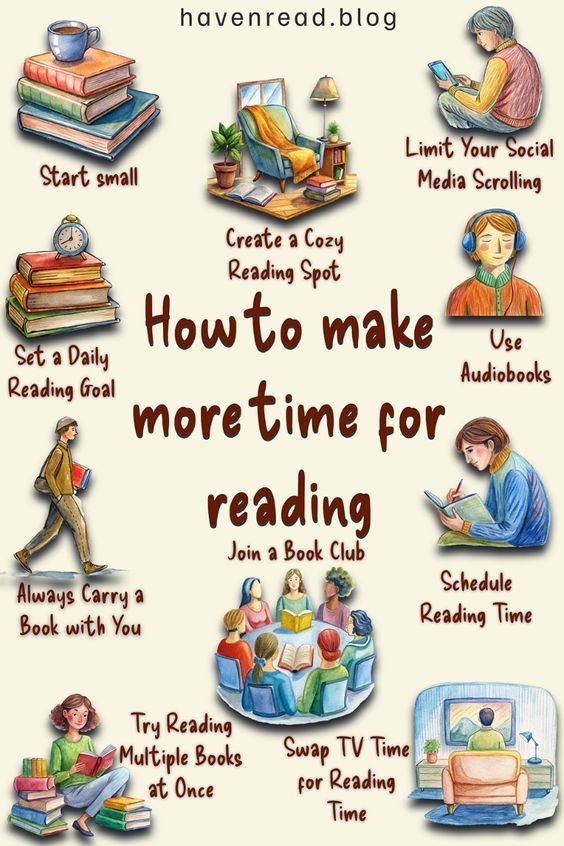
If you feel overwhelmed by the sheer number of books available, curate a personal list that keeps you inspired. Having a "next up" book ready eliminates the decision fatigue that often leads to scrolling on your phone instead of picking up a book.
- Diversify your genres: If you find yourself in a reading slump, switch to a different genre—try poetry, a fast-paced thriller, or a compelling biography.
- Keep a list: Use a notes app or a physical journal to keep track of recommendations from friends or reviews you’ve seen.
- Multiple books at once: Don't be afraid to have a few books in rotation. One for audio, one for your nightstand, and one for your commute allows you to match your reading to your current mood or energy level.
Step 4: Master the Art of "Giving Up"
One of the most liberating rules for readers is that you do not have to finish every book you start. If a book isn't grabbing your attention, it is perfectly acceptable to set it aside.
- Check your purpose: Ask yourself if you are reading for pleasure or knowledge. If a book fails to provide either, it is wasting your time.
- Skip the fluff: If you are reading non-fiction, feel free to skip chapters that aren't relevant to your current goals.
- Verify your engagement: If you have been dragging through a book for more than two weeks without interest, it is time to move on to something that excites you.
Step 5: Replace Digital Distractions
Your smartphone is the single greatest competitor to your reading time. To reclaim your attention, you must create boundaries.
- The "Phone-Free" Zone: When you sit down to read, leave your phone in another room.
- Digital Alternatives: Use the Kindle app or other reading platforms on your phone, but be disciplined about turning off notifications while you read.
- Waiting Room Wins: Instead of checking social media while waiting for an appointment or standing in line, pull out your book. These "stolen minutes" can add up to dozens of books per year.
The Cognitive and Emotional Benefits of Reading
It is worth remembering why you are building this habit. Research consistently shows that a consistent reading habit provides profound benefits that extend far beyond the pages of a book.
Cognitive Enhancement and Focus
In a world of fragmented attention, reading is a workout for your brain. It improves your ability to concentrate on a single task, enhances your memory, and sharpens your critical thinking skills. By engaging with long-form text, you are effectively training your mind to focus in a way that social media scrolling actively works against.
Stress Reduction and Mental Health
Immersing yourself in a narrative is one of the most effective ways to lower stress levels. When you read, your heart rate slows, and your muscles relax. It acts as a form of "mental escape," providing a necessary break from the pressures of work, family, and the digital grind.
Expanding Your Knowledge and Perspective
Whether you are reading fiction or non-fiction, you are absorbing new ideas and perspectives. As the famous writer Haruki Murakami once noted, "If you only read the books that everyone else is reading, you can only think what everyone else is thinking." By diversifying your reading list, you challenge your own biases and broaden your understanding of the world.
Step 6: Create an Environment That Invites Focus
Your physical environment acts as a silent nudge toward your habits. If your space is cluttered or filled with digital temptations, your brain will naturally default to the path of least resistance—usually scrolling. Designing a dedicated reading space, even if it is just a corner of your couch, signals to your brain that it is time to shift gears.
- Remove digital triggers: If your reading spot is near a television, consider turning the screen away or keeping the remote in a drawer.
- Optimize lighting: Ensure you have adequate lighting to prevent eye strain, which is a common reason people stop reading after only a few minutes.
- Incorporate sensory cues: Use a specific blanket, a warm beverage, or even a soft background soundscape to create an immersive atmosphere.
- Verify your environment: If you find yourself reaching for your phone within 10 minutes of sitting down, your space likely needs more physical barriers between you and your digital devices.
Caution: Avoid reading in bed if you struggle with insomnia. While reading before bed is a great habit, if you associate your bed with active mental engagement rather than sleep, it may lead to difficulty drifting off. If you are struggling to sleep, move to a chair nearby until you feel drowsy.
Step 7: Utilize the "Audiobook Advantage"
Many people mistakenly believe that audiobooks are a "shortcut" or "not real reading." Research and anecdotal evidence suggest otherwise. Audiobooks are an incredible tool for busy individuals who want to consume more stories and information but lack the physical time to sit still with a book (Source 2).
- Multitask effectively: Listen during chores, grocery shopping, or while performing repetitive work tasks.
- The "Run-Listen" Connection: Many readers find that pairing a thrilling audiobook with exercise makes the workout feel less taxing and actually motivates them to exercise longer (Source 2).
- Audiobook etiquette: Do not let anyone gatekeep your reading habits. If you enjoy the content and learn from it, it counts as reading.
Step 8: Keep a "Reading Log" for Motivation
Tracking your progress is not just about counting books; it is about building a feedback loop that rewards your effort. When you see a visual representation of the books you have finished, it provides a sense of accomplishment that fuels future reading.
- Visual logging: Use a simple reading journal or a digital app to mark off each book as you complete it.
- The 2026 Reading Log: Many readers find that participating in a yearly reading challenge or downloading a community-based reading log helps them stay accountable (Source 2).
- Reflective notes: Write one or two sentences about how a book made you feel. This turns passive consumption into active engagement.
- Verify success: At the end of every month, look back at your list. If you see a growing list of titles, you have successfully transformed your spare time into a productive, fulfilling habit.
Step 9: Join or Start a Community
Reading can be a solitary activity, but it doesn’t have to be. Sharing your thoughts with others deepens your understanding of the text and keeps you motivated to keep turning pages.
- Book clubs: Join a local library book club or an online community. The social pressure of having to discuss a book by a certain date is a highly effective motivator.
- Digital accountability: Share your progress on social media using hashtags or join reading groups on platforms like Goodreads or StoryGraph.
- The conversation effect: Discussing a book helps you retain more information and forces you to think critically about the themes and arguments presented by the author.
Step 10: Curate Your Input to Avoid "Content Fatigue"
In the digital age, we are often overwhelmed by the sheer volume of information. If you find yourself unable to focus, you might be suffering from "content fatigue." This happens when you consume too much short-form, low-value content, making long-form reading feel exhausting.
- The "Slow Content" diet: Intentionally limit your time on social media platforms that prioritize short-form clips.
- Quality over quantity: Focus on books that challenge you or bring you genuine joy rather than trying to keep up with every bestseller list.
- The "One-In, One-Out" rule: If you have a stack of unread books that is causing you anxiety, put them away. Only keep a few titles visible at a time to reduce the feeling of being overwhelmed.
- Verify your focus: If you can read 20 pages without your mind wandering to your phone, your brain is successfully recalibrating to long-form focus.
Why Your Reading Habits Stall (And How to Fix Them)
Even the most dedicated readers hit a wall. Understanding the psychology behind why we stop reading is the first step toward building a resilient habit.
The Myth of the "Non-Reader"
One of the biggest hurdles is the internal narrative that "I am just not a reader." This is a limiting belief. As noted by experts, anyone can build a reading habit if they adjust their environment and expectations (Source 3). The difference between a "reader" and a "non-reader" is rarely talent or intelligence; it is simply the presence of a system that makes reading accessible.
Overcoming "Decision Fatigue"
When you have too many books, you spend more time choosing what to read than actually reading.
- Pre-selection: Spend time once a month selecting your next two or three books.
- The "Book Basket": Keep a small basket of books you are excited about in your primary living area. This limits your choices to a manageable number of high-interest items.
Managing Expectations
If you expect to read as fast as you did when you were younger or when you had more free time, you will inevitably feel frustrated. Acknowledge that your reading speed and capacity will fluctuate based on your life stage. Reading for 10 minutes a day is a success, not a failure.
The Science of Habit Formation in Reading
Understanding how habits work can help you hack your own brain to prioritize reading. The process involves a cue, a routine, and a reward.
- The Cue: This is the trigger. It could be "putting on my pajamas" or "sitting on the train." Make the cue obvious.
- The Routine: This is the act of reading. Keep it simple and low-friction.
- The Reward: This is the feeling of satisfaction or relaxation you get after reading. Acknowledge this feeling. The more you consciously notice how good you feel after a reading session, the more your brain will crave that activity in the future.
Advanced Strategies for Avid Readers
Once you have established a baseline habit, you might want to increase the depth or volume of your reading. These strategies are for those who want to turn reading from a simple habit into a lifestyle.
Interleaving Topics
Don't stick to one subject for too long. If you are reading a dense non-fiction book, pair it with a light fiction novel. This "interleaving" helps keep your brain fresh and prevents the feeling of intellectual burnout.
The "Margin Note" Technique
If you are reading for growth or learning, engage with the text physically. Write in the margins, underline key passages, or keep a separate journal for quotes. This turns reading into a conversation between you and the author.
Leveraging Library Systems
If you are a voracious reader, the cost of books can add up.
- Libby/Overdrive: Use these apps to borrow e-books and audiobooks from your local library for free.
- Requesting titles: Don't hesitate to ask your librarian to order specific books. Libraries are often much more responsive than people realize.
Handling the "Reading Slump"
Every reader experiences a slump—a period where nothing sounds interesting and you cannot seem to focus. Do not panic. This is normal.
- The "Palate Cleanser" book: Pick up a book you have already read and loved. Re-reading a favorite is the fastest way to get back into the flow.
- Change the medium: If you are stuck on a physical book, switch to an audiobook or a graphic novel. Changing the input method can bypass the mental block.
- Short-term goals: Lower your requirement to just one page a day. Often, once you start, you will naturally read more, but the low bar removes the pressure.
Troubleshooting Common Obstacles
Even with the best intentions, life will occasionally throw a wrench in your plans. Here is how to handle the most common issues:
- "I am too tired at night": Shift your reading to the morning. Even 10 minutes with your coffee is better than trying to force yourself to read when your eyes are closing.
- "I don't have enough time": Analyze your "dead time." How much time do you spend waiting in lines, commuting, or sitting in the car? These are your secret reading hours.
- "I keep falling asleep": This is actually a good sign that your body needs rest. Use the reading to help you transition into sleep, but don't feel bad if you only get through two paragraphs before the book hits your chest.
The Role of Curiosity in Sustaining the Habit
The most sustainable reading habit is one driven by genuine curiosity. If you are reading out of a sense of obligation, the habit will eventually crumble.
- Follow the "Rabbit Hole": If a book mentions a topic that interests you, let that lead you to your next book. This organic discovery process makes reading feel like a personal adventure rather than a chore.
- The "Murakami Rule": As mentioned earlier, don't just read what is popular. If a niche topic fascinates you, lean into it. Your unique reading list is a reflection of your unique intellect (Source 1).
Building Your Personal Library
You don't need a massive bookshelf to be a reader, but curating a small, high-quality collection can be deeply satisfying.
- Curated collections: Only keep books that you would re-read or that have had a significant impact on your thinking.
- The "To-Read" shelf: Keep a dedicated space for books you intend to read next. This makes your future reading feel like an exciting anticipation rather than a daunting backlog.
Designing Your Reading Routine for 2026
To truly make reading a part of your life in 2026, you must treat it with the same respect as a professional meeting or a health appointment.
- Schedule it: Block out 15 minutes on your calendar for reading. Treat it as a non-negotiable appointment with yourself.
- Communicate your boundaries: Let family or roommates know that when you are in your "reading spot," you are unavailable for a set period.
- Review and adjust: Every Sunday, look at how much you read. Was the time of day effective? Did you enjoy the books? If not, adjust your plan for the following week.
Incorporating Social Reading
If you find that you struggle to stay motivated on your own, consider the power of social reading.
- Buddy Reads: Find a friend who wants to read the same book. Agree to read a certain number of chapters per week and check in with each other. This creates a shared experience and builds accountability.
- Local Events: Keep an eye out for author talks or bookstore events. Engaging with the broader literary community can reignite your passion for reading.
The Ethics of "Skimming" and "Selecting"
It is a common misconception that you must read every word of a book to "count" it. In reality, how you read depends entirely on your goals.
- For pleasure: Read every word, savor the prose, and enjoy the journey.
- For learning: Skim the table of contents, jump to the chapters that matter most, and extract the information you need.
- Verify your success: If you walked away from the book with a new idea or a sense of peace, you read it correctly.
The Power of the "First Five Minutes"
The hardest part of any reading session is the first five minutes. This is when your brain is still trying to figure out if it would rather be doing something else.
- The 5-minute rule: Commit to reading for five minutes. If you still hate it, you are allowed to stop. Usually, by the time the five minutes are up, the "friction" has vanished, and you will find yourself wanting to continue.
- Why it works: It bypasses the fear of starting a long task. It turns a "marathon" into a "sprint," and as we know, small, consistent efforts lead to big results (Source 1).
Understanding the "Reading Slump" vs. "Burnout"
Sometimes, a reading slump isn't about the book; it is about your mental state. If you are experiencing high levels of stress or burnout in other areas of your life, you might find it difficult to concentrate on a book.
- Be kind to yourself: It is okay to take a break from reading. Life has seasons, and sometimes your capacity for deep focus will be lower than usual.
- The transition back: When you are ready to return, start with something very light—a collection of short stories, a graphic novel, or even a book for children. This removes the "work" element and allows you to enjoy the process again.
Developing Your "Reader's Identity"
Over time, reading will stop being something you "try" to do and start being something you "are." This shift in identity is the ultimate goal.
- Identify as a reader: When you start telling yourself and others that you are a reader, you are more likely to act in accordance with that identity.
- The ripple effect: As you read more, you will find that your conversations become richer, your empathy increases, and your ability to articulate complex thoughts improves.
The Role of Digital Hygiene
We have discussed replacing digital distractions, but it is also important to consider how your digital presence supports your reading.
- Curating your feeds: Follow accounts that share book recommendations, literary news, or thoughtful reviews. Let your social media feeds work for you by turning them into a source of inspiration rather than a drain on your focus.
- The "Airplane Mode" trick: When you sit down to read, put your phone in airplane mode. This prevents incoming notifications from breaking your flow state.
The Long-Term Impact on Cognitive Health
It is important to remember that the benefits of reading are not just immediate—they are cumulative.
- Neurological benefits: Research suggests that regular reading can help maintain cognitive function as we age. It is a form of neuroplasticity that keeps your brain agile and resilient.
- Emotional intelligence: By reading diverse stories, you are consistently practicing empathy. You are living a thousand lives, which helps you better understand the people you encounter in your daily life.
Why "Starting Small" is the Only Strategy That Lasts
We return to the most critical point: the necessity of starting small. Whether it is 5 minutes a day or 5 pages, the goal is to create a habit that is so easy you cannot fail.
- Consistency builds identity: By showing up for 5 minutes a day, you prove to yourself that you are a reader.
- Compounding interest: 5 pages a day is 1,825 pages a year, which is roughly 6 to 8 full-length books. That is a significant amount of knowledge and entertainment that you would have otherwise missed.
- Verify your success: If you have read at least 5 pages today, you are officially on your way to a more enriched, intellectually engaged life.
Step 11: Embrace the "Library-First" Philosophy
One of the greatest barriers to reading is the perceived cost of buying books. However, your local library is a treasure trove of resources that can sustain your reading habit for free.
- Utilize your local branch: Beyond physical books, libraries offer e-books and audiobooks through apps like Libby, meaning you have a massive collection in your pocket at all times.
- Request new titles: If a book is trending, don't wait for it to be on the shelf; place a hold immediately. This creates a "surprise gift" effect when the book arrives weeks later.
- Verify your success: If you have checked out at least one item from your library this month, you have successfully tapped into a sustainable, cost-effective reading pipeline.
Caution: Do not let a long "hold" list discourage you. Use the wait time to clear your current backlog, which naturally keeps your reading pace consistent.
The Final Shift: From Consumption to Connection
Ultimately, reading is not a race to finish the most books or a performance to impress others. It is an act of connection—to the author, to new ideas, and to your own inner life. By treating your reading time as a non-negotiable appointment, you are choosing to prioritize your intellectual health in a world that constantly demands your distraction.
Whether you read five pages of a thriller during your morning coffee or listen to a dense biography during your commute, you are winning. You are reclaiming your focus, one page at a time. Start today, keep it simple, and watch as your world expands, one book at a time.
References
-
Kohleyedme — Read More, Scroll Less: How to Make Reading a Daily Habit, 2026
-
Everyday-reading — 35 Ideas For How To Read More – Everyday Reading, 2026
-
Successity — How to Build a Habit of Reading Every Day – successity.net, 2026
-
Illumeably — 20 Ways to Make Reading a Daily Habit | Illumeably, 2026
-
Collegenp — 9 Practical Tips to Start Reading More Every Day – Collegenp, 2026
-
Medium — 7 Practical Tips to Start Reading More Every Day – Medium, 2026
-
Lifehack — 15 Simple Tips to Help You Find Motivation to Read More, 2026
-
Dailyreadinghabit — How to Develop a Reading Habit? 10 Simple Steps That Actually Work, 2026