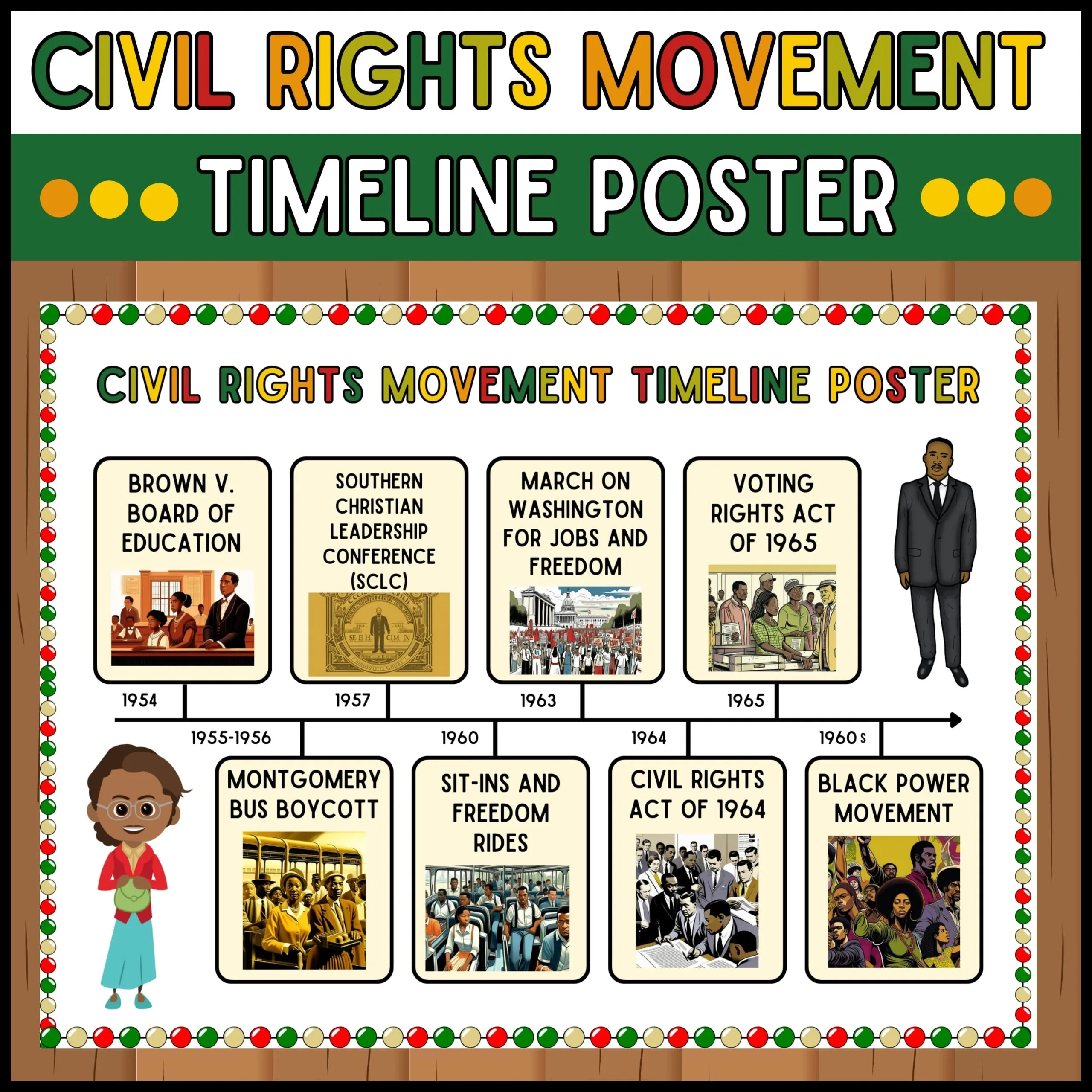
To understand the present state of modern democracy, one must systematically dismantle the sanitizing myths of its past. The struggle for racial equality is frequently reduced to a series of neat, inevitable victories led by a handful of charismatic figures. However, engaging with Civil Rights history through the lens of nonfiction books reveals a far more complex, dangerous, and unfinished campaign. By treating historical literacy as an active intellectual pursuit, readers can defend their understanding against revisionism and shallow commercial narratives.
"History, as no one seems to know, is not merely something to be read. And it does not refer merely, or even principally, to the past. On the contrary, the great force of history comes from the fact that we carry it within us, are unconsciously controlled by it in many ways, and history is literally present in all that we do." — James Baldwin
This guide approaches the vast catalog of Civil Rights literature through a structured analytical framework. We will examine the core narrative objectives, dissect the common historical distortions that compromise public understanding, and map out a resilient reading curriculum designed to build an unshakeable foundation of historical truth.
The Blue Team Objective: Safeguarding Truth in Civil Rights Literature
In this intellectual framework, the "Blue Team" represents the reader, educator, or historian striving to protect and preserve historical accuracy. The primary objective is to construct a robust, multi-dimensional mental model of the Civil Rights Movement. This model must withstand the erosion of time, political exploitation, and cultural amnesia.
Achieving this objective requires moving beyond superficial historical summaries. A dedicated reader must seek out nonfiction texts that utilize primary source documentation, oral histories, and rigorous socio-economic analyses. By doing so, we establish a baseline of truth that acknowledges both the extraordinary triumphs of grassroots organizing and the deeply entrenched systemic barriers that activists fought to dismantle.
The Red Team Threat Model: How Historical Narratives are Undermined
The "Red Team" represents the passive cultural forces, political agendas, and institutional mechanisms that distort, sanitize, or dilute the radical reality of the Civil Rights Movement. These forces do not always operate through outright censorship; more frequently, they succeed through selective curation, oversimplification, and the promotion of comfortable myths.
To defend against these narrative distortions, we must first identify the specific methods of attack used to undermine historical literacy. These attacks target different dimensions of the historical record, from the scale of the struggle to the identities of its key participants. Below, we break down these primary narrative attacks, their methods, and their systemic impacts.
Attack Scenario 1: The "Great Man" Myth and Individualization
The Deification of Isolated Leaders
This attack method reduces a massive, decentralized mass movement down to the biography of a few exceptional individuals. By centering the entire narrative on figures like Dr. Martin Luther King Jr. or Rosa Parks, the systemic efforts of thousands of local organizers, legal strategists, and ordinary citizens are effectively erased.
- Method of Distortion: Framing systemic victories as the sole result of charismatic speeches and singular acts of individual courage.
- Systemic Impact: Cultivates a passive civic mindset, suggesting that social change only occurs when an extraordinary savior emerges, rather than through collective grassroots action.
- Literary Countermeasure: Prioritizing organizational histories and memoirs of mid-level organizers who managed the daily logistics of the struggle.
Attack Scenario 2: Chronological Erasure and the "1954–1968" Border Wall
The Artificial Narrowing of the Timeline
This attack method confines the Civil Rights Movement to a strict, brief window: beginning with the Brown v. Board of Education decision in 1954 and abruptly ending with the assassination of Dr. Martin Luther King Jr. in 1968.
- Method of Distortion: Treating the movement as a sudden, isolated eruption of activism that concluded once major federal legislation was signed into law.
- Systemic Impact: Obscures the decades of radical labor organizing, anti-lynching campaigns, and legal battles that preceded 1954, while completely ignoring the ongoing post-1968 struggles against systemic economic disenfranchisement and mass incarceration.
- Literary Countermeasure: Reading comprehensive histories that trace the "Long Civil Rights Movement" from the Reconstruction era through the late 20th century.
Attack Scenario 3: The Geographic Containment of Racial Injustice
Isolating Racism to the Jim Crow South
This narrative attack frames systemic racism and segregation as a uniquely Southern pathology, ignoring the profound racial subjugation occurring simultaneously in the American North, Midwest, and West.
- Method of Distortion: Focusing exclusively on Southern battlegrounds like Alabama and Mississippi while omitting the structural redlining, police brutality, and school segregation of Chicago, Detroit, and Los Angeles.
- Systemic Impact: Falsely reassures non-Southern readers of their regional innocence, obscuring the nationwide architecture of white supremacy and systemic inequality.
- Literary Countermeasure: Analyzing books that focus specifically on the Northern civil rights struggles and the nationwide implementation of discriminatory housing and labor policies.
Attack Scenario 4: Sanitizing Radical Economic Demands
The Erasure of Class and Capitalism
This attack strips the movement of its radical economic critiques. It presents the struggle purely as a quest for social integration and legal voting rights, completely omitting the deep-seated demands for wealth redistribution, guaranteed income, and labor reform.
- Method of Distortion: Editing out the late-stage speeches of Dr. King regarding democratic socialism, and ignoring the socialist roots of key organizers like A. Philip Randolph and Bayard Rustin.
- Systemic Impact: Prevents modern readers from connecting historic civil rights struggles to contemporary issues of wealth inequality, labor exploitation, and economic justice.
- Literary Countermeasure: Engaging with economic histories of the movement and texts analyzing the intersection of race and capitalism in America.
Attack Scenario 5: Overlooking the Intersectional Vanguard
The Marginalization of Women and Queer Activists
This narrative distortion minimizes or entirely omits the foundational contributions of Black women, queer individuals, and youth organizers who drove the movement's strategy, logistics, and philosophical development.
- Method of Distortion: Relegating women to background support roles and completely erasing key figures like Bayard Rustin due to his identity as a gay man.
- Systemic Impact: Presents a patriarchal, highly conservative version of the movement that fails to reflect its true diversity and radical inclusivity.
- Literary Countermeasure: Reading biographies and memoirs centered on Black feminist theory, youth mobilization, and queer organizers within the movement.
The Red Team vs. Blue Team Defense Matrix
To systematically counter these narrative distortions, readers must employ targeted literary defenses. The table below maps specific narrative attacks to their corresponding literary controls—highly regarded nonfiction books that directly refute the distortion—along with the residual blind spots that readers must continue to monitor.
| Narrative Attack (Red Team) | Literary Control (Blue Team Defense Book) | Key Historical Correction | Residual Blind Spot to Monitor |
|---|---|---|---|
| Great Man Myth | Ella Baker and the Black Freedom Movement by Barbara Ransby | Highlights decentralized, group-centered leadership over charismatic hierarchy. | Localized dynamics in unexamined rural counties. |
| Chronological Erasure | The Warmth of Other Suns by Isabel Wilkerson | Traces the multi-decade epic of the Great Migration as a continuous civil rights act. | The specific experiences of non-migrant Southern agrarian workers. |
| Geographic Containment | Sweet Land of Liberty by Thomas J. Sugrue | Exposes the brutal, systemic reality of the civil rights struggle in the North. | Racial dynamics in the American Southwest and Pacific Northwest. |
| Economic Sanitization | From Here to Equality by William A. Darity Jr. and A. Kirsten Mullen | Lays out the economic case for reparations, tracing the wealth gap to systemic policy. | Modern micro-lending and local municipal policy variations. |
| Intersectional Vanguard | Bayard Rustin: Troubles I've Seen by Jervis Anderson | Restores the brilliant, queer architect of the March on Washington to his rightful place. | The undocumented oral histories of trans and gender-nonconforming activists of color. |
Purple Team Integration: Synthesizing Lived Experience with Structural Analysis
A "Purple Team" approach does not choose between personal memoirs and dry, academic, policy-driven histories. Instead, it actively synthesizes both forms of nonfiction to construct a complete, humanized understanding of the era. Follow these steps to integrate lived experience with structural analysis in your reading practice:
- Pair Memoirs with Policy Books: Whenever you read a deeply personal memoir, immediately follow it with a structural or sociological text covering the exact same era or location.
- Analyze the Tension: Look for areas where the individual's lived experience either validates or challenges the broad academic consensus of the time.
- Evaluate Source Material: Check the bibliographies of your books to ensure the authors are utilizing both state records (such as FBI files or legislative minutes) and community-level primary sources (local newspapers, church records, and oral history archives).
- Trace the Policy to the Pavement: Map how federal legislative victories (like the Voting Rights Act of 1965) actually manifested in the daily lives of local organizers on the ground.
- Document the Unfinished Work: Identify the specific demands raised in historic memoirs that have still not been addressed by modern public policy.
Crucial Prerequisites for Navigating Civil Rights Historiography
Before diving headfirst into dense academic histories, it is essential to establish a baseline of historical literacy. Approaching these texts without preparation can lead to cognitive fatigue or a failure to grasp the broader context. Ensure you complete these steps before starting your reading journey:
- Understand the Legal Landscape: Familiarize yourself with the basic legal mechanisms of segregation, including the Supreme Court's 1896 Plessy v. Ferguson decision and the subsequent Jim Crow laws.
- Acknowledge the Scale: Recognize that the movement was not a monolithic organization, but a loose, often fractious coalition of distinct groups with competing strategies and ideologies.
- Prepare for Emotional Labor: Nonfiction accounts of this era detail horrific state-sanctioned violence, terror, and profound injustice; prepare yourself mentally for the heavy emotional weight of these truths.
- Establish a Geographic Reference: Keep a map of the United States handy to trace the migration patterns, protest routes, and regional battlegrounds discussed in the texts.
Pitfalls of Relying Solely on Contemporary Bestseller Lists
While modern bestseller lists can highlight excellent new releases, relying on them exclusively to build your historical foundation carries significant risks. Curated lists are often influenced by market trends rather than historical depth.
- The Trap of "Feel-Good" Narratives: Commercial algorithms favor books that offer simple, redemptive arcs over complex, unsettling systemic critiques.
- Neglecting Out-of-Print Classics: Some of the most radical, unfiltered primary accounts were published in the 1970s and 1980s and are rarely featured on modern digital storefronts.
- Over-Reliance on Secondary Synthesis: Modern popular histories often summarize primary sources rather than engaging with them directly, leading to a dilution of the original message.
- Homogenization of Voices: Major publishing houses may repeatedly elevate a narrow circle of established academic voices, sidelining localized, independent, or community-based historians.
Advanced Analytical Tools for the Modern Historian-Reader
To elevate your reading from passive consumption to active historical analysis, you should utilize the same open-source digital archives and research tools used by professional historians.
- The Library of Congress Digital Collections: Access thousands of digitized photographs, oral history recordings, and personal papers from key civil rights figures at the Library of Congress.
- The National Archives: Research federal court cases, FBI surveillance files (such as COINTELPRO documents), and presidential papers directly through the National Archives.
- The Civil Rights Digital Library: Utilize this portal to access educational resources, news film clips, and primary documents from archives across the United States.
- Comparative Historiography: When reading about a specific event (like the Selma to Montgomery marches), read accounts written in different decades to analyze how the historical perspective has evolved over time.
The 12-Month Historical Literacy Drill Schedule
To build a comprehensive, resilient understanding of Civil Rights history, follow this structured, quarterly reading curriculum. This schedule balances memoirs, local organizing histories, economic analyses, and national policy studies.
Quarter 1: Foundations and the Pre-1954 Landscape
- Month 1: Read The Warmth of Other Suns by Isabel Wilkerson to understand the demographic shift of the Great Migration.
- Month 2: Read Stony the Road: Reconstruction, White Supremacy, and the Rise of Jim Crow by Henry Louis Gates Jr.
- Month 3: Read Ida: A Sword Among Lions by Paula J. Giddings to study the early anti-lynching campaigns and Black female leadership.
- Month 4: Review primary documents from the NAACP's early legal strategy campaigns against educational segregation.
Quarter 2: Grassroots Mobilization and Local Organizing
- Month 5: Read Ella Baker and the Black Freedom Movement by Barbara Ransby to understand decentralized organizing.
- Month 6: Read I've Got the Light of Freedom: The Organizing Tradition and the Mississippi Freedom Struggle by Charles M. Payne.
- Month 7: Read Walking with the Wind: A Memoir of the Movement by John Lewis for an insider perspective on youth mobilization.
- Month 8: Examine oral histories from the Student Nonviolent Coordinating Committee (SNCC) digital archives.
Quarter 3: The Northern Struggle and the Intersection of Class
- Month 9: Read Sweet Land of Liberty: The Forgotten Struggle for Civil Rights in the North by Thomas J. Sugrue.
- Month 10: Read The Radical King, edited by Cornel West, to engage directly with Dr. King's writings on labor and economic justice.
- Month 11: Read From Here to Equality: Reparations for Black Americans in the Twenty-First Century by William A. Darity Jr. and A. Kirsten Mullen.
- Month 12: Read The New Jim Crow: Mass Incarceration in the Age of Colorblindness by Michelle Alexander to connect historic policies to modern systemic crises.
Connecting the Southern Literary Landscape to Historical Reality
While nonfiction provides the structural scaffolding of historical truth, creative literature often captures the psychological, emotional, and cultural realities of the Jim Crow era. The atmospheric dread, systemic violence, and moral decay of the segregated South are deeply explored through fiction as well. Understanding the historical realities of this era can enrich your reading of other literary genres.
For example, exploring the Best Southern Gothic Books Every Reader Should Explore reveals how Southern writers used grotesque imagery, haunting settings, and deeply flawed characters to expose the hypocrisy, terror, and unresolved trauma of the Jim Crow South. By reading these creative works alongside rigorous historical nonfiction, you can gain a far more visceral, empathetic understanding of the environment in which Civil Rights activists operated.
Strategic Takeaways for Building an Unshakeable Historical Foundation
Developing a true, uncompromised understanding of the Civil Rights Movement is an ongoing, lifelong discipline. It requires a deliberate willingness to seek out uncomfortable truths, challenge established cultural myths, and constantly diversify your reading list. By utilizing the structured frameworks, analytical tools, and reading schedules laid out in this guide, you can successfully defend your historical literacy against sanitization and political distortion. Your next step is to select one book from the defense matrix, access a primary source archive, and begin your journey into the deep, radical history of the struggle for human dignity.