How Reading Can Improve Focus And Personal Growth
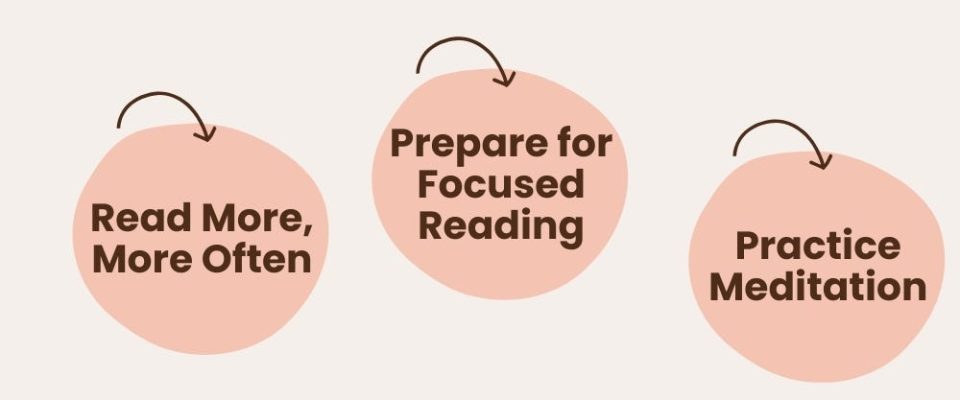
In an era defined by rapid-fire notifications, short-form video loops, and the constant pressure to "just Google it," the human capacity for deep, sustained attention is under siege. As we navigate 2026, the ability to focus is no longer just a soft skill—it is a competitive advantage. Reading for personal growth has emerged as the ultimate antidote to the fragmentation of our attention spans. Far from being a passive hobby, reading is a high-intensity cognitive workout that rewires your brain, sharpens your focus, and builds the mental stamina required for high-level success.
Why Reading is the Ultimate Cognitive Workout
Many people mistakenly believe that skimming articles or watching quick summaries provides the same value as deep reading. Neuroscience tells us otherwise. When you engage with a book, your brain performs a complex series of tasks: it visualizes narratives, analyzes arguments, and retains information, all while filtering out environmental distractions.
The Neuroscience of Attention
Think of your focus as a muscle. Like any physical muscle, it atrophies when neglected through passive activities like endless social media scrolling. Research confirms that reading strengthens the neural pathways responsible for executive functions. By choosing a book over a digital feed, you are systematically training your brain to concentrate on a single, demanding task for an extended period. This is not just about learning facts; it is about building the mental endurance needed to tackle complex work projects and achieve your most ambitious goals.
Beyond Information: Activating Knowledge
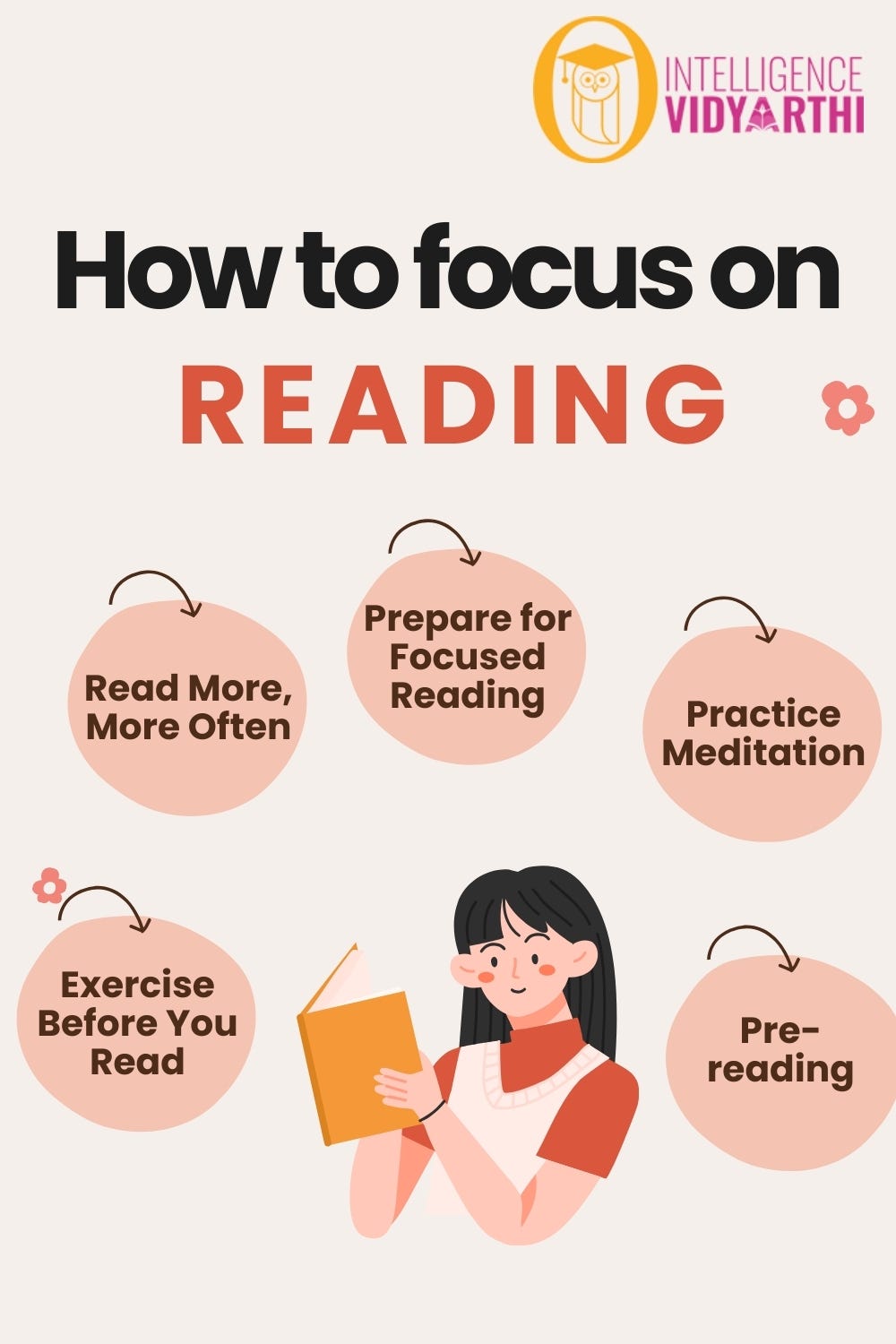
A study on ResearchGate confirms that reading does more than pass information; it activates knowledge. When you read, you are participating in a dialogue with the author, questioning assumptions, and comparing new concepts against your existing mental models. This active engagement is the hallmark of lifelong learning and is essential for developing the critical thinking skills needed to navigate the complexities of 2026.
Prerequisites for a Successful Reading Habit
Before you dive into your next book, you must set the stage for success. Building a habit that lasts requires more than just good intentions; it requires an environment designed for deep work.
Tools and Materials Needed:
- A dedicated, distraction-free space: A quiet corner or chair where you do not engage in other digital activities.
- A "Reading Toolkit": A physical book or an e-reader (with notifications disabled), a notebook for capturing insights, and a pen.
- A designated reading time: A consistent window of 15–30 minutes daily.
- A reading list: A curated selection of books aligned with your specific personal growth goals for 2026.
Warning: Avoid "multi-tasking" while reading. Trying to listen to a podcast or check emails while reading a book will negate the cognitive benefits of deep focus. Treat your reading time as a sacred, singular activity.
Step-by-Step Guide to Building Your 2026 Reading Habit
To turn reading into a powerful tool for success, follow this structured, research-backed sequence.
1. Define Your Reading "Why"
Before opening a book, identify your objective. Are you looking to improve leadership skills, manage stress, or master a new technical hobby? Successful achievers like Warren Buffett, who spends nearly 80% of his day reading, treat knowledge as a competitive advantage.
- Verification: You know this step is successful when you can articulate exactly how a specific book will help you solve a current problem or reach a 2026 milestone.
2. Start with Micro-Goals
Consistency is far more important than intensity. Do not aim to read a book a week right away. Start with 15–30 minutes of daily reading. By keeping the barrier to entry low, you ensure the habit sticks even on your busiest days.
- Verification: You have succeeded if you have read for at least 15 minutes for five consecutive days without skipping.
3. Create an "Analogue" Environment
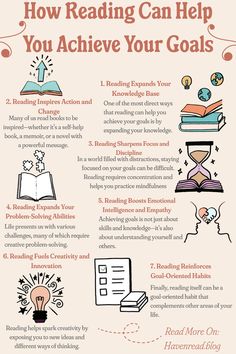
Digital devices are designed to trigger distraction. To train your brain for deep focus, you must physically remove the temptation of your phone. Place your device in another room during your designated reading window.
- Verification: You are successful if you complete your reading session without once checking a notification or feeling the "itch" to scroll.
4. Practice Active Engagement
Don't just let the words wash over you. Annotate, underline, and ask questions. When you encounter a complex idea, stop and reflect on how it applies to your personal or professional life.
- Verification: After finishing a chapter, you should be able to summarize the three most important takeaways in your own words.
5. Transfer Your Focus to Real-World Goals
The concentration you build while reading is a transferable skill. Once you feel your focus improving, consciously apply that same "deep work" mindset to your professional projects or creative tasks.
- Verification: You will notice that you can work on complex tasks for longer periods without feeling the need to check your phone or switch tabs.

The Psychological Impact of Consistent Reading
Reading is not merely an intellectual pursuit; it is a vital health habit. Research consistently shows that reading for as little as 10 minutes a day can significantly lower stress levels and improve mental well-being. By calming the mind and reducing anxiety, reading helps you build the emotional resilience necessary to handle the pressures of our modern, fast-paced society.
Furthermore, reading exposes you to diverse cultures and viewpoints, which is the primary driver of emotional intelligence. By stepping into the shoes of different characters or exploring new philosophies, you develop a more holistic perspective, making it easier to build stronger relationships both personally and professionally.
Designing an Intellectual Architecture for Growth
To maximize the ROI of your reading time, you must move beyond passive consumption. Many high-performers treat their personal library as a knowledge management system. By organizing your reading, you create a feedback loop that transforms fleeting ideas into long-term mental assets. This architectural approach to reading ensures that you aren't just filling your head with information, but rather building a robust framework for complex problem-solving.
The Methodology of Systematic Reading
Systems thinkers, such as Elon Musk, famously utilized intensive reading to master fields as complex as aerospace engineering (Source 3). This was not achieved by reading randomly, but by systematically deconstructing complex systems into their foundational principles. You can mirror this process by categorized your reading list into "pillars" of growth.
- Pillar 1: Skill Acquisition: Technical manuals or books focused on specific tools, languages, or methodologies.
- Pillar 2: Mental Models: Philosophical, psychological, or historical works that explain how the world works rather than just what is happening.
- Pillar 3: Narrative/Empathy: Fiction or biographies that expand your emotional intelligence and ability to navigate human complexity (Source 2).
- Verification: You have successfully implemented this system when your bookshelf or digital library reflects a deliberate balance between these three pillars, rather than a collection of random bestsellers.
Capturing Insights for Future Application
The biggest mistake most readers make is the "illusion of competence"—the belief that because you understood a page, you have mastered the concept. Research suggests that active recall and spaced repetition are the only ways to ensure long-term retention (Source 4).
Tools for Capturing Insights:
- The Marginalia Method: Using a pen to write directly in your book, noting points of disagreement or immediate application.
- The Zettelkasten or "Commonplace" Book: A dedicated journal where you transcribe the most transformative ideas, organized by theme rather than by book title.
- Digital Annotation Sync: Utilizing tools like Readwise to automatically export your e-reader highlights into a searchable database.
Caution: Do not fall into the trap of "productivity porn"—where you spend more time organizing your notes than actually reading the material. The goal is to capture enough to trigger memory, not to rewrite the entire book.
Cultivating Deep Focus in a Distracted Environment
The ability to maintain concentration during a reading session is a bellwether for your overall cognitive health. If you cannot focus for 30 minutes on a book, your ability to perform high-level work in your professional life is likely compromised. Reading for personal growth acts as a diagnostic tool for your attention span.
The "Deep Work" Threshold
To achieve a flow state while reading, you must cross the "Deep Work Threshold." This is the period of 10–15 minutes where your brain shifts from the superficial, rapid-fire processing required for social media to the slow, analytical processing required for dense text.
- Eliminate Micro-Distractions: Even a phone resting face-down on your desk drains cognitive resources. Remove all digital stimuli from your line of sight.
- Calibrate Your Environment: Use ambient noise—such as brown noise or instrumental music—to mask environmental interruptions that break your concentration.
- The 20-Minute Sprint: Commit to 20 minutes of uninterrupted reading. If you feel the urge to check a notification, log the urge on a piece of paper and continue reading. You will likely find the urge dissipates within seconds.
- Verification: You have succeeded when you can read a complex, non-fiction chapter without feeling the physical restlessness or anxiety typical of "digital withdrawal."
Strengthening Cognitive Stamina
Just as a runner must gradually increase their mileage to avoid injury, you must increase your reading duration to avoid cognitive fatigue. Start with 15 minutes, then increase by 5 minutes each week. This progressive overload builds the neural pathways responsible for sustained attention (Source 3).
- Week 1-2: 15 minutes daily.
- Week 3-4: 25 minutes daily.
- Week 5-8: 45 minutes daily.
- Week 9+: 60+ minutes or "Deep Reading" sessions.
The Intersection of Empathy and Critical Thinking
One of the most profound, yet often overlooked, benefits of reading is the expansion of emotional intelligence. By engaging with diverse narratives, you are forced to step outside your own cognitive biases. This is a critical component of personal growth, as it prevents the intellectual stagnation that comes from only consuming information that aligns with your pre-existing beliefs (Source 2).
Developing Analytical Empathy
When you read a biography or a complex piece of literature, you are simulating another person's decision-making process. This provides a safe, low-stakes environment to practice critical thinking. Ask yourself these questions as you read:
- "Why did the author choose this specific evidence to support their argument?"
- "What are the implicit assumptions being made here?"
- "How would this argument change if the context were shifted to my current industry or life situation?"
By constantly engaging in this internal dialogue, you move from being a passive consumer of information to an active participant in intellectual discourse. This shift is what separates leaders from followers.
The Role of Diverse Perspectives
Consistently reading authors who challenge your worldview is the fastest way to sharpen your critical thinking skills. If your reading list is an echo chamber, your growth will eventually plateau.
- Seek Out Dissent: Actively search for books that argue against your core professional or personal philosophies.
- Cross-Pollinate Disciplines: If you are a software engineer, read about history. If you are a marketing professional, read about biology. The most innovative ideas often come from applying concepts from one field to another (Source 5).
- Verification: You are successful when you find yourself changing your mind on a previously held belief due to the evidence presented in a book.
Managing the "Information Overload" Paradox
In 2026, the problem is not a lack of information; it is the abundance of it. Many people fall into the trap of "reading everything," which leads to cognitive paralysis. To grow, you must be a ruthless curator of your own intellectual intake.
The Filtered Consumption Strategy
You do not have the time to read every book published. You must adopt a "quality over quantity" mindset. Use these filters before committing time to a book:
- The "Three-Chapter Rule": Give a book three chapters to prove its value. If it is not challenging, teaching, or inspiring you by the end of the third chapter, stop reading it. Your time is a finite resource.
- The Networked Recommendation: Only read books recommended by people whose results you admire. If you want to improve your financial management, read what successful investors read, not what is trending on social media (Source 3).
- The "Just-in-Time" vs. "Just-in-Case" Approach: Focus on reading books that solve a problem you are facing right now (Just-in-Time). Save the general interest reading (Just-in-Case) for your leisure hours.
Warning: Avoid the "collector's fallacy"—the belief that owning or buying a book is the same as reading it. A library of unread books provides zero benefit to your personal growth.
Sustaining the Habit Through Seasonal Cycles
Building a long-term habit is not a linear process. You will have weeks where you are too busy or too mentally drained to open a book. The difference between those who achieve mastery and those who fail is the ability to recover from a "habit break."
The 2-Day Rule
Never miss more than two days in a row. If you miss one day, it is an anomaly. If you miss two, it is the start of a new, negative habit. By setting this hard boundary, you maintain the cognitive momentum required to keep reading as a central pillar of your life (Source 4).
Seasonal Reading Adjustments
Your reading habits should evolve with your professional and personal life.
- High-Stress Periods: During peak work seasons, scale back to 10 minutes of light, inspiring reading (biographies or philosophy) to keep the habit alive without adding cognitive burden.
- Growth Periods: During times of transition or learning, lean into high-intensity, technical reading to accelerate your skill acquisition.
- Verification: You have successfully mastered the habit when reading feels as essential and natural as brushing your teeth—a non-negotiable part of your daily routine.
The Long-Term Impact on Professional Success
While the benefits to personal growth are immediate, the professional impact of consistent reading compounds over time. This is the "Compound Interest of Knowledge." Every book you read adds to your mental reservoir, allowing you to make faster, more accurate decisions than those who rely only on their own limited experiences.
Synthesizing Knowledge for Innovation
True innovation occurs when you synthesize disparate ideas into a new solution. By reading broadly and deeply, you increase the surface area of your knowledge, making it more likely that you will have the "aha!" moment that leads to a breakthrough in your career.
- Identify Patterns: As you read across different fields, you will start to notice recurring themes—such as the importance of feedback loops, the necessity of failure, or the power of compounding.
- Apply to Workflow: Take these patterns and map them onto your current projects. If a business strategy in a biography worked for a tech giant, how can you adapt that logic for your small team?
- Document the Results: Keep a simple log of how your reading has influenced a professional decision. This reinforces the value of the habit and provides motivation to continue.
- Verification: You will know this is working when colleagues begin to seek your counsel on complex problems, noting your ability to provide unique, well-reasoned perspectives that others haven't considered.
Building a Legacy of Lifelong Learning
Ultimately, the goal of reading for personal growth is to transition from a consumer of content to a producer of value. By cultivating this habit, you are not just improving your focus; you are building a foundation of resilience and intellectual agility that will serve you for the rest of your life.
The world of 2026 demands individuals who can filter noise, synthesize complex information, and maintain sustained focus. By following these steps and treating your intellectual growth as a deliberate, systematic process, you position yourself to thrive in an environment where others are merely struggling to keep up.
Remember, the goal is not to finish the most books; the goal is to be changed by the ones you do finish. Every page turned is a step toward a more focused, more capable, and more thoughtful version of yourself. Start with your next 15 minutes, and trust the process of incremental growth. Your future self will thank you for the focus you are building today.
Advanced Techniques for Information Synthesis
Once you have established the habit of daily reading, the next level of growth is moving from consumption to information synthesis. This is where the true competitive advantage of reading lies. Instead of merely remembering what you read, you begin to weave disparate concepts into a cohesive mental framework that functions as a personal operating system.
The Art of Interdisciplinary Mapping
The most successful innovators rarely stick to one domain. By practicing interdisciplinary mapping, you can take a concept from biology and apply it to organizational management, or use historical precedents to predict future market trends. This cross-pollination is a hallmark of high-level cognitive function (Source 5).
- Identify the Core Principle: When reading, look for the "underlying mechanism" rather than just the plot or the specific case study.
- The "Analogy Search": Ask yourself, "Where else have I seen this pattern in my life or career?"
- Create a Synthesis Map: Use a whiteboard or digital tool to draw connections between books you have read in the last six months.
- Verification: You are successful when you can explain a complex technical concept using a metaphor from an entirely unrelated field, effectively bridging the gap for your peers.
Building a Personal "Second Brain"
To prevent the knowledge you acquire from fading, you must move it from your biological memory to an external system. This allows your brain to stay focused on high-level synthesis rather than low-level retrieval.
Materials Needed:
- A Content Repository: A digital app (like Obsidian, Notion, or Evernote) to store your notes.
- The "Atomic Note" Strategy: Break every complex book idea down into a single, concise note that represents one specific concept.
- Linking Logic: Use backlinks or tags to connect your new notes with existing ideas in your database.
Warning: Do not copy-paste large blocks of text. The act of rewriting a concept into your own words is the only way to ensure deep encoding of the information. If you can’t explain it in your own words, you haven't learned it.
Mastering the Environment: Sensory Optimization
The physical and sensory environment in which you read dictates the depth of your focus. In 2026, where digital intrusions are omnipresent, you must treat your reading space as a sensory fortress. By optimizing your surroundings, you lower the cognitive load required to enter a "flow state."
Auditory Control and Cognitive Load
While some find absolute silence effective, others benefit from "sound masking." The key is consistency. By using the same auditory trigger every time you read, you create a Pavlovian response that tells your brain it is time to focus.
- Brown Noise: Research suggests that low-frequency noise like brown noise can help mask erratic sounds and promote deeper relaxation than white noise.
- Instrumental Focus: Avoid music with lyrics, as the language centers of your brain will attempt to process the words, competing with the text you are reading.
- The "Focus Playlist": Create a curated 30-minute loop that you only play when reading.
- Verification: You have reached a state of deep focus when you stop noticing the background sound entirely and lose track of time.
Lighting and Ergonomics
Physical comfort is essential for sustained attention. If you are physically uncomfortable, your brain will constantly send signals to move, breaking your concentration.
- Task Lighting: Use a warm-toned lamp directed at the page to reduce eye strain and signal to your brain that this is a specific, focused task.
- The 90-Degree Rule: Ensure your posture is upright. Slouching or reading in bed signals to the brain that it is time for rest, not intense cognitive work.
- Visual Anchors: Use a bookmark or a physical pointer to guide your eyes. This simple technique, borrowed from speed-reading, keeps your focus locked on the line you are currently processing.
Overcoming the "Reading Plateau"
Every reader experiences a period where they feel they are no longer progressing. This is often the point where you have exhausted the "low-hanging fruit" of easy-to-read books and need to level up your difficulty.
The Challenge-Competence Balance
If a book is too easy, you become bored; if it is too hard, you become frustrated. To maintain growth, you must intentionally seek out books that are slightly above your current level of understanding (Source 4).
- Identify Your "Stretch" Subjects: Choose a field you know nothing about—such as quantum physics, advanced macroeconomics, or classical philosophy.
- The "Two-Book" Strategy: Pair a difficult book with a "primer" or a summary that explains the basic terminology.
- Iterative Reading: Don't be afraid to re-read a difficult book. The second time through, your brain will be able to process the concepts faster, allowing you to focus on the nuances you missed the first time.
- Verification: You have successfully pushed your boundaries when you finish a book that you previously thought was "too dense" or "too boring" for your tastes.
The Role of Social Accountability
Reading is often a solitary act, but connecting with a community can provide the social pressure needed to maintain consistency.
- The "Reading Accountability Partner": Pair up with a colleague or friend and agree to read the same book, then discuss it for 15 minutes once a week.
- The "Synthesis Presentation": Volunteer to present a key takeaway from your reading at your next team meeting. This forces you to internalize the material for the purpose of teaching others.
- Verification: You are successful when your accountability partner relies on your insights as much as you rely on theirs, turning your reading into a collaborative asset.
Developing Intellectual Humility through Diverse Inputs
A major trap in personal development is "confirmation bias"—reading only the books that reinforce what you already believe. True intellectual growth requires the courage to be wrong.
The "Opposing Viewpoint" Challenge
Whenever you feel strongly about a topic, consciously seek out a book that argues the opposite position. This exercise is one of the most effective ways to sharpen your critical thinking and emotional intelligence (Source 2).
- Identify Your Echo Chambers: Audit your bookshelf. If every author holds a similar political, professional, or philosophical view, you are in an echo chamber.
- Seek the "Best-in-Class" Opposition: Do not look for weak arguments. Find the most respected, well-reasoned author who disagrees with you and read their work with an open mind.
- The "Steel-Man" Exercise: After reading an opposing view, try to write a summary of their argument that is so accurate, the author would agree with your interpretation.
- Verification: You have mastered intellectual humility when you can comfortably hold two conflicting ideas in your head without feeling the need to immediately dismiss one to protect your ego.
The History of Ideas
To understand the present, you must understand the genealogy of ideas. Reading foundational texts from the past allows you to see the patterns that govern current events.
- Read the "Greats": Spend time with the original thinkers in your field. Often, their writing is clearer and more profound than the modern "derivative" books that summarize their work.
- Contextualize: Always ask, "What was the author trying to solve in their time?" This helps you apply the method of their thinking rather than just the result.
- Verification: You are successful when you start seeing recurring historical patterns in today's news headlines, allowing you to predict shifts before they become mainstream.
Managing Intellectual Energy
Reading requires significant mental energy. If you treat it as something to do when you are "exhausted," you will rarely get the most out of your books. You must manage your intellectual energy with the same care as your physical energy.
The Circadian Reading Rhythm
Most people have a specific time of day when their cognitive function is at its peak. For many, this is early morning; for others, it is late at night.
- The Peak-Performance Window: Schedule your most challenging reading for your peak cognitive hours.
- The "Low-Energy" Buffer: Save lighter reading—such as biographies or long-form essays—for when your mental energy is lower, ensuring you still hit your daily habit goals without burning out.
- Verification: You have optimized your energy when you can finish a difficult chapter without needing to re-read sentences multiple times due to fatigue.
Preventing Cognitive Overload
In the digital age, we are constantly bombarded with "input." If you are also reading heavily, you can reach a state of cognitive saturation.
- The "Reading Fast": If you feel overwhelmed, take a 48-hour break from all new information. No books, no articles, no podcasts. This allows your brain to "defrag" and synthesize what you have already consumed.
- The "Output-to-Input Ratio": Ensure you are spending as much time applying your knowledge (writing, building, teaching) as you are consuming it.
- Verification: You feel a sense of clarity and "itch" to start reading again after your break, signaling that your brain is ready for new input.
The Future of Focused Learning
As we progress through 2026, the divide between those who can focus and those who cannot will continue to widen. By choosing to prioritize deep, sustained reading, you are investing in the most important asset you own: your ability to think clearly.
Building Your Legacy
Your reading list is a map of your intellectual journey. By keeping a record of what you have read and how it changed you, you are creating a legacy of growth that goes far beyond a resume.
- The Annual Review: At the end of each year, look back at your "Commonplace Book" or reading log. Identify the three books that had the most significant impact on your life.
- The "Next-Year" Pivot: Use these insights to plan your reading for the following year, focusing on the areas where you need the most growth.
- Verification: You can look back at your notes from a year ago and see a clear, measurable shift in your thinking, your vocabulary, and your ability to solve complex problems.
By committing to this process, you are not just reading books; you are training your mind for a lifetime of success, focus, and intellectual discovery. Every session, every page, and every annotation is a brick in the foundation of your future self. Keep reading, keep questioning, and keep growing.
References
-
Storiesis — The Transformative Power of Reading for Personal Growth, 2026
-
Mindsethighlife — The Importance of Reading for Personal Growth, 2026
-
Prabhatonline — Reading for Personal Growth: Benefits, Habits, and Success Strategies, 2026
-
Brainzmagazine — The Psychological Power of Reading and Why It is Essential for Personal …, 2026
-
Scientific-jl — THE ROLE OF READING IN PROMOTION LIFELONG LEARNING AND INTELLECTUAL GROWTH, 2026
-
Researchgate — The power of reading and strategies to develop a reading habit, 2026
-
Readinggenius — The Importance of Reading For Brain Power and Growth, 2026
-
Readinggenius — Does Reading Improve Focus? The Science Says Yes, 2026